 Wind Family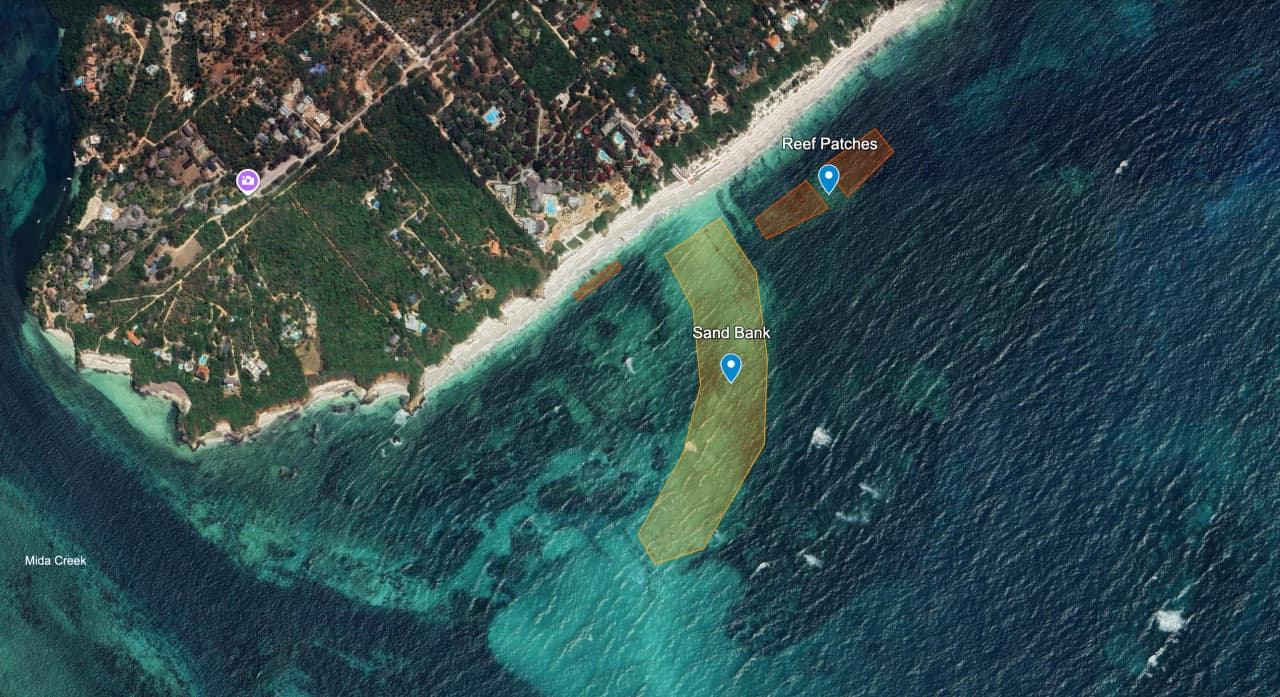
Watamu is one of the kindest places in the world to learn kitesurfing. The lagoon is wide and shallow, the water is warm, and the reef takes the ocean swell so you don't have to. That kindness is exactly why it deserves respect: it makes it easy to forget you are still on the open coast of the Indian Ocean.
Here is the honest list. Every rider who comes through a Wind Family school hears some version of it on day one.
The tide owns the lagoon
The tidal range here is measured in metres, not centimetres, and it changes the playing field completely. At high water you have a generous, forgiving lagoon. A few hours later the same spot is a maze of sandbars with coral heads sitting just under the surface.
Check the tide table before you pump up, not after. Around low water, ride further out, keep your fins in mind, and resist the urge to send it in water you have not stood in. Locals time their sessions around the tide as naturally as around the wind. Do the same.
The reef, and what lives on it
The reef is the reason the lagoon exists, and it is also the sharpest thing you will meet all day. Coral cuts get infected fast in the tropics, and sea urchins gather where the reef meets the sand.
Wear booties, shuffle your feet in shallow water, and never stand on coral. Beyond the manners of it, this is a marine national park: the reef is protected, and the rangers take that seriously. So do we.
We mapped the reef patches and sandbanks of the lagoon ourselves. Zoom around before your first session; it is the next best thing to a local pointing from the beach.
Wind that changes its mind
The kusi blows steadily from the south from roughly June to September, and the kaskazi comes from the northeast around December to March. Most days are honest, side-onshore wind that brings you home.
Watch for two exceptions. Rain squalls on the horizon can double the wind or kill it within minutes, so if the sky goes dark upwind, come in early. And the further you ride toward the reef line, the more the wind and current want to take you past it. Outside the reef is real ocean. Stay inside unless you have a boat watching you.
Boats, lines and swimmers
The lagoon is a working place. Glass-bottom boats cross it all day, mooring buoys trail rope that loves a kite line, and in high season the water near the hotels fills with swimmers.
Launch and land away from the crowds, give every boat and buoy more room than feels necessary, and keep a kite line's length between you and anyone in the water. The beach is shared. Riding like a guest keeps it that way.
The sun, quietly
Nothing on this list will get you more reliably than the equatorial sun. Two hours on the water feels like twenty minutes. Drink more water than you think you need, reapply sunscreen at every break, and wear a top with sleeves. The wind hides the burn until the evening.
Ask before you launch
None of this is meant to scare you off. It is the briefing every local rider carries in their head, and it is yours for free: walk into any of the member schools and ask about today's conditions before you launch. Someone who rode the same spot yesterday will tell you more than any forecast.
It is also the first thing our scholarship students learn, before the bar, before the board. Reading the water keeps you riding for years. That is the whole idea.
New to the spot? This list is one chapter of a bigger picture.
 Kitesurfing in Watamu: The complete guide